



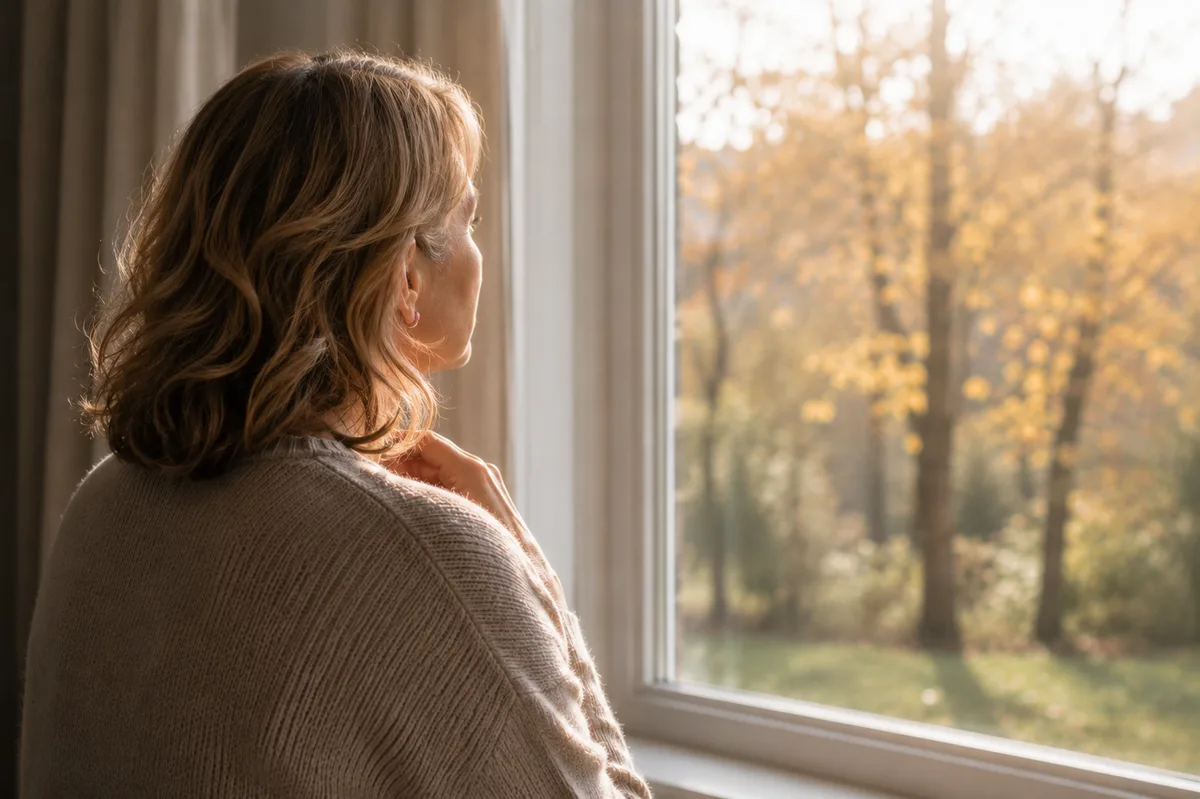
The hardest sentence she will ever hear.
On day one she is handed a diagnosis and, usually, a leaflet. What she is not handed is a picture of where this leads. That void — the unknown — is the part patients say is hardest of all. It is exactly the void pink was built to fill: from the very first consultation, she can be shown, not just told.
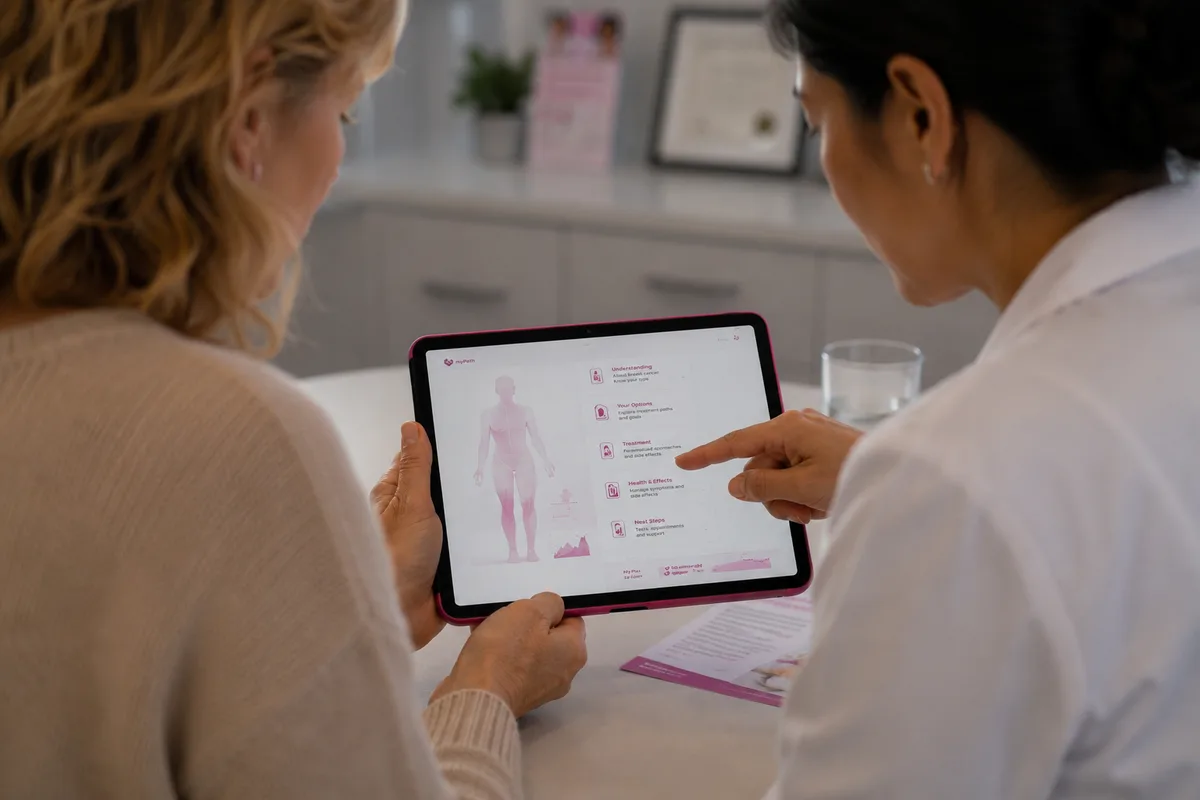
Two doors — and now she can see through both.
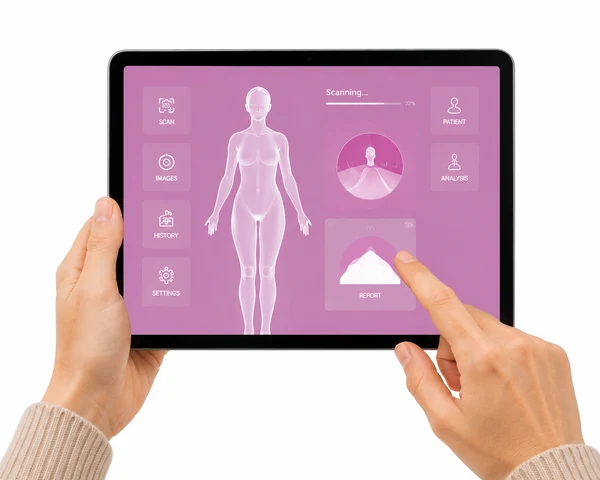
Breast-conserving surgery or mastectomy; reconstruction or not. Each option leads to a different outcome for her own body. Trained on pink's rigorously consistent imaging, the model previews each path on her — side by side, on a tablet, with her clinician beside her. The decision stays hers; it is simply made with her eyes open.
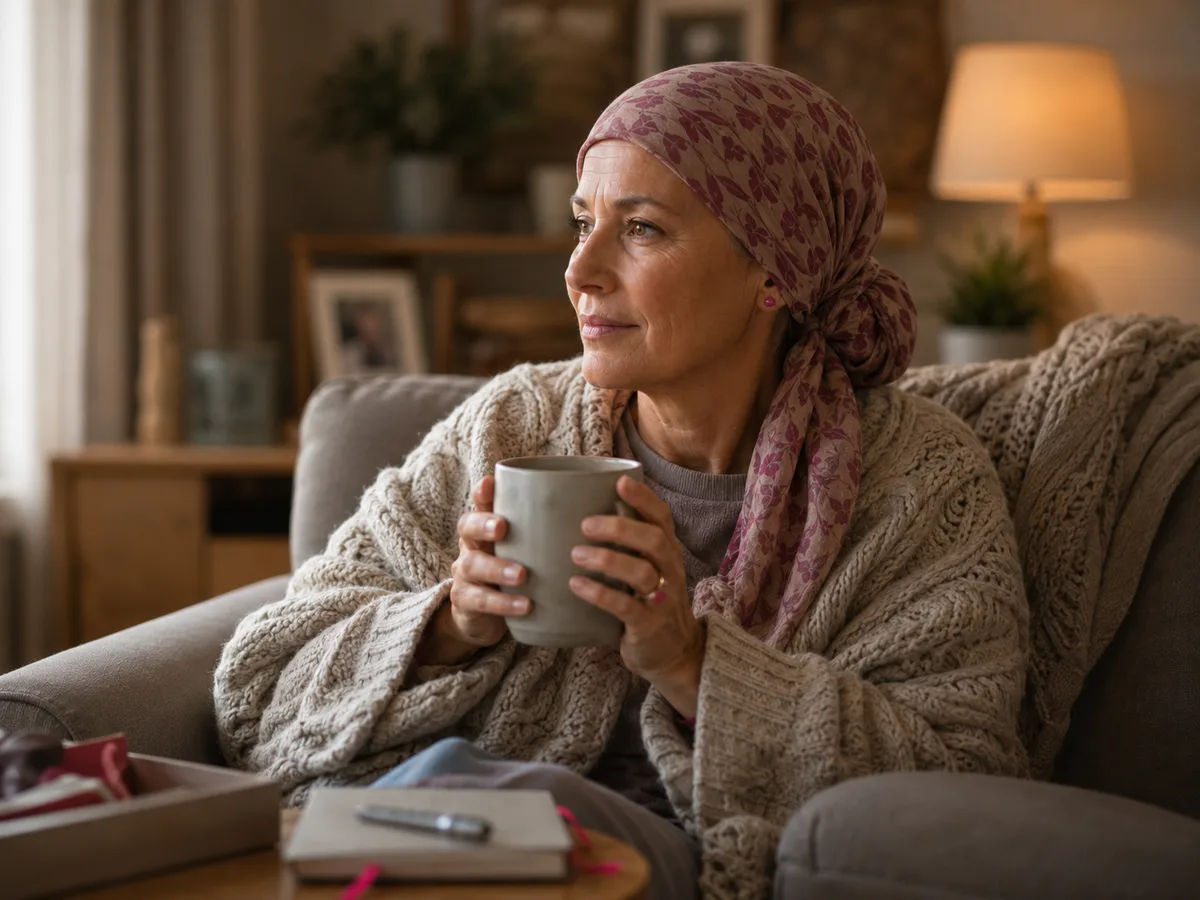
The months in between, no longer a blank.
Surgery, radiotherapy, the slow weeks of healing. Knowing roughly how each stage will look and feel takes the dread out of the unknown — and lets her spend her energy on getting well rather than on fearing what she cannot picture.

A path she already recognises.
Because she saw it coming, recovery is not a series of frightening surprises but a process she can follow — and one she can share with her clinicians and her family, who are walking it with her.

Well — and looking forward, with the people she did it for.
The end of the story is the most important part of it: years of ordinary life, regained. The mornings, the family walks, the bedtime stories. This is, in the end, what all of the engineering is ultimately for.