


PhotoRobot Medical · breast cancer care
Clinically proven with Cinderella Project
The breakthrough is no longer a hope. It works.

Breast cancer.

She has just heard the hardest news of her life. For the first time, she can see her way through it.

pink is a working medical photographer robot. It already captures the most consistent breast-surgery imaging in the world — and from it, a newly diagnosed woman can see, before she chooses anything, how each path through treatment and recovery will look on her own body. No one else on earth can show her that. We are looking for the partners to bring it to every woman who needs it.

Working todayNot a prototype
World-uniqueDataset no one else holds
Clinically provenCinderella · 5 countries
Seeking partnersTo scale the next level
A woman looking forward — composed, the centre of this story
Why this matters

At the centre of all of this is one person — and she is not a data point.

A diagnosis of breast cancer is one of the hardest things a person will ever hear. It is almost impossible to step into that moment from the outside. What we can do is make sure she does not walk the hardest year of her life blind — that she has a calm, honest guide to what is coming, something she can hold onto and share with the people she loves.

That is what this technology gives her: a truthful visual companion through the changes to her own body, across the whole arc of treatment. Not a brochure of someone else's results — her options, on her body, before she decides. The fear of the unknown is replaced by something she can look at, understand, and talk through. She can spend her energy on healing, on her family, and on the many good years that come after she is well again.

A woman at a kitchen table with a mug, looking out the window
The hardest newsShe hears it, and the imagining begins — the worst kind, the unknown kind.
A husband standing behind his wife, hand resting on her shoulder
Not carried aloneA hand on her shoulder. Whatever comes, she is not facing it by herself.
A mother painting her daughter's nails on the sofa
Still here, still motheringStill the one who reads the bedtime story. That does not stop.
Two women at a kitchen table looking at a tablet together
She can see her own pathHer options, on her own body, before she chooses anything.
A mother and grown daughter sharing tea, laughing softly
The years afterWell again — and looking forward, which is the part that matters most.
Alone · supported · still herself · in control · looking forward
What she can see — before she decides

The entire path, previewed on her own body, on day one.

Because pink captures every stage identically, the AI trained on it can show a new patient a faithful preview of where each decision leads — from the choice of surgery, through the months of treatment, to full recovery and the years beyond.

Day one — the diagnosis
01
The diagnosis
Day one. The questions begin — and now they have answers she can see.
The choice — each surgical option previewed
02
The choice
Each surgical option, previewed on her own body, side by side.
During treatment
03
During treatment
What the months of surgery and radiotherapy will look like.
Recovery — the body settling
04
Recovery
The body settling, healing — no longer a frightening unknown.
The years after — well, looking forward
05
The years after
Well again, and able to plan for them with confidence.
Walk her year, stage by stage — expand the full story
The diagnosis — a woman processing the news alone
Stage 01 — the diagnosis

The hardest sentence she will ever hear.

On day one she is handed a diagnosis and, usually, a leaflet. What she is not handed is a picture of where this leads. That void — the unknown — is the part patients say is hardest of all. It is exactly the void pink was built to fill: from the very first consultation, she can be shown, not just told.
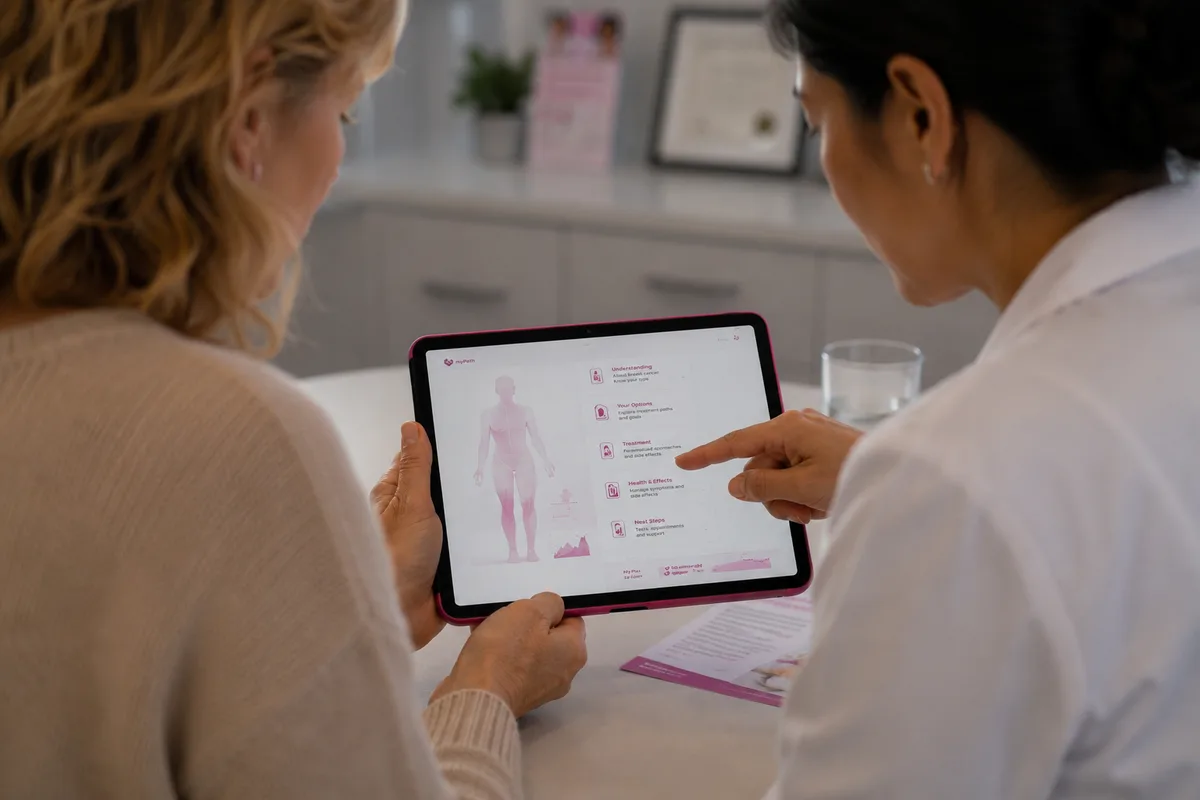
The choice — reviewing options on a tablet with a clinician
Stage 02 — the choice

Two doors — and now she can see through both.

Breast-conserving surgery or mastectomy; reconstruction or not. Each option leads to a different outcome for her own body. Trained on pink's rigorously consistent imaging, the model previews each path on her — side by side, on a tablet, with her clinician beside her. The decision stays hers; it is simply made with her eyes open.
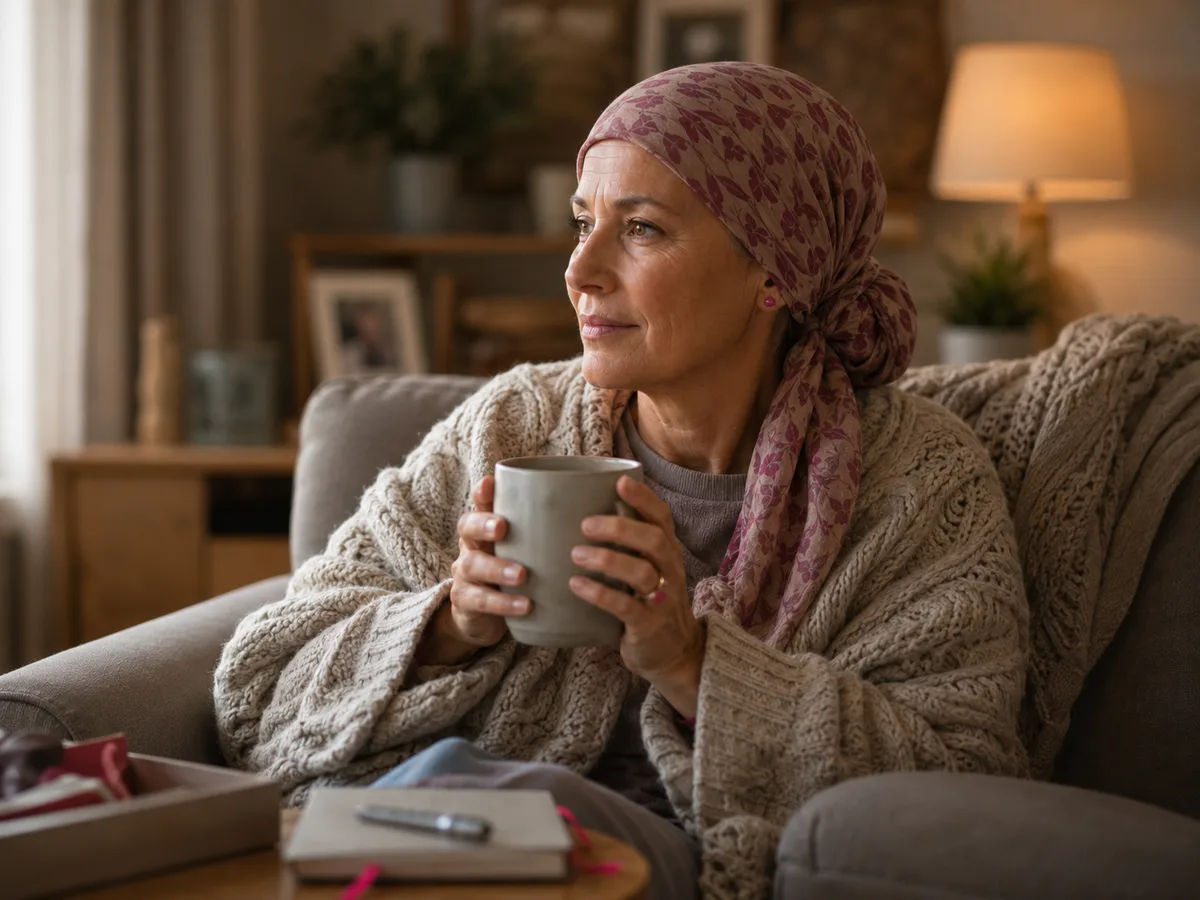
During treatment — resilient at home
Stage 03 — during treatment

The months in between, no longer a blank.

Surgery, radiotherapy, the slow weeks of healing. Knowing roughly how each stage will look and feel takes the dread out of the unknown — and lets her spend her energy on getting well rather than on fearing what she cannot picture.

Recovery — walking forward
Stage 04 — recovery

A path she already recognises.

Because she saw it coming, recovery is not a series of frightening surprises but a process she can follow — and one she can share with her clinicians and her family, who are walking it with her.

The years after — looking forward in bright light
Stage 05 — the years after

Well — and looking forward, with the people she did it for.

The end of the story is the most important part of it: years of ordinary life, regained. The mornings, the family walks, the bedtime stories. This is, in the end, what all of the engineering is ultimately for.
Where we stand today

Five years ago this was an ambition. Today it is a machine on a hospital floor — and a dataset no one else in the world has.

The story used to be told in the future tense: what if we could capture imaging consistent enough to train an AI to predict surgical outcomes? That question is answered. pink is built, deployed, and working at clinical sites across Europe and Israel. Every day it produces breast-surgery photography of an accuracy and consistency that consumer cameras and smartphone apps were never able to match.

Out of that work grew something rarer than the machine itself: a clinically-gathered, rigorously uniform dataset of the breast-surgery journey — the raw material that makes credible, personalised prediction possible. It is, as far as we know, unique on the planet. It is the asset nobody else can simply buy or rebuild, because the only way to gather it was to build pink first.

Built & working pink is in clinical service today — not a render, not a roadmap.
Uncompromised data Consistency smartphones and lightboxes never reached — by design.
One of a kind A breast-surgery imaging dataset no competitor holds.
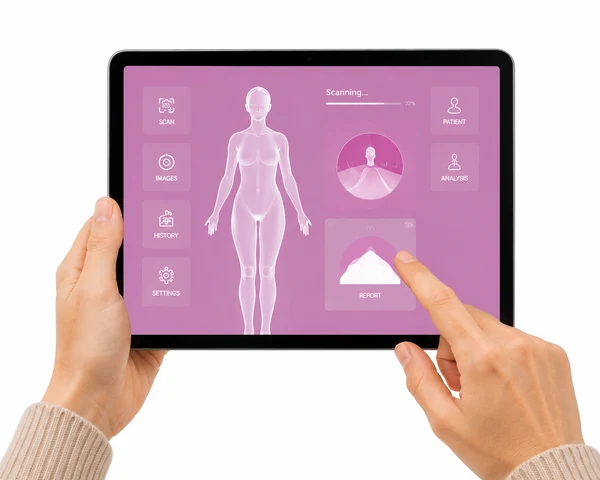
pink capture and analysis interface running on a tablet
The working capture & analysis interface — real software, in clinical use today.
Why it can't be shortcut

Garbage in, garbage out — which is exactly why this is defensible.

Plenty of people tried the cheap path first: patient self-capture on smartphones, low-cost lightbox clones, mobile photo workflows promising the same result for a fraction of the cost. The outputs were consistently inconsistent — lighting, framing, distance, colour, exposure all drifting from one session to the next. An AI trained on that produces noise, not predictions.

A century of photographic engineering does not bend itself around a workflow shortcut. That is the uncomfortable truth for anyone hoping to leapfrog the hard part — and it is precisely what makes pink's position defensible. The moat is the consistency, and the consistency only comes from purpose-built hardware.

Interestingly, the researchers who most wanted to democratise this — to put it in everyone's hands via a phone — were the first to confirm it could not be done that way. The conclusion was not a matter of opinion. It came out of the data.

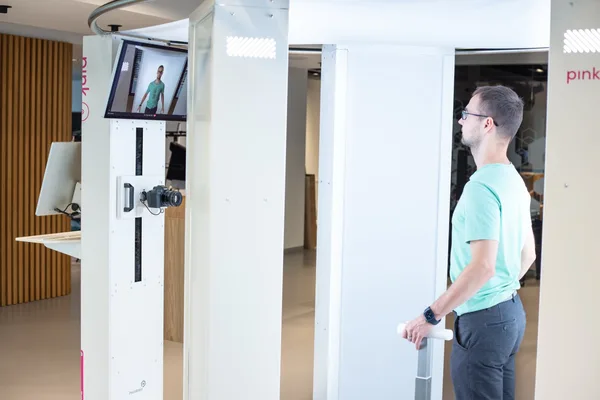
pink cabin interior — controlled geometry, studio-grade lighting, repeatable poses
pink — controlled cabin geometry, studio-grade lighting, repeatable poses.
The machine

pink — built for clinical hands, gentle on the patient.

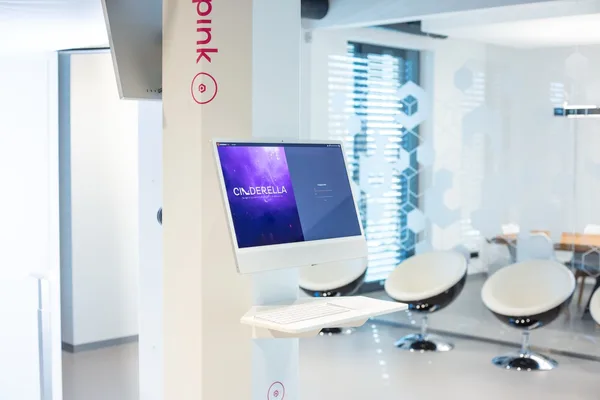
For the clinical team, pink runs on a single touchpoint. No photographic software to learn, no exposure to set, no lighting to maintain. The operator confirms the patient ID, she steps in, the protocol runs — capture automatic, metadata stamped at exposure, anonymisation done before any image leaves the device.

For the patient, pink is deliberately unintimidating. A curved white cabin instead of a clinical photo room, diffuse studio light instead of surgical glare. She dresses and undresses in privacy. The session takes minutes. Nothing about it feels like being examined.

Operator and patient interface on pink — a single touchpoint
One operator, one touchpoint — no photographic skill required of the clinician, nothing clinical-feeling for the patient.
"The robot's name is Pink, and a prototype is being built by the Czech company PhotoRobot using photographic equipment from Canon."
Champalimaud Foundation · official project announcement, 2022
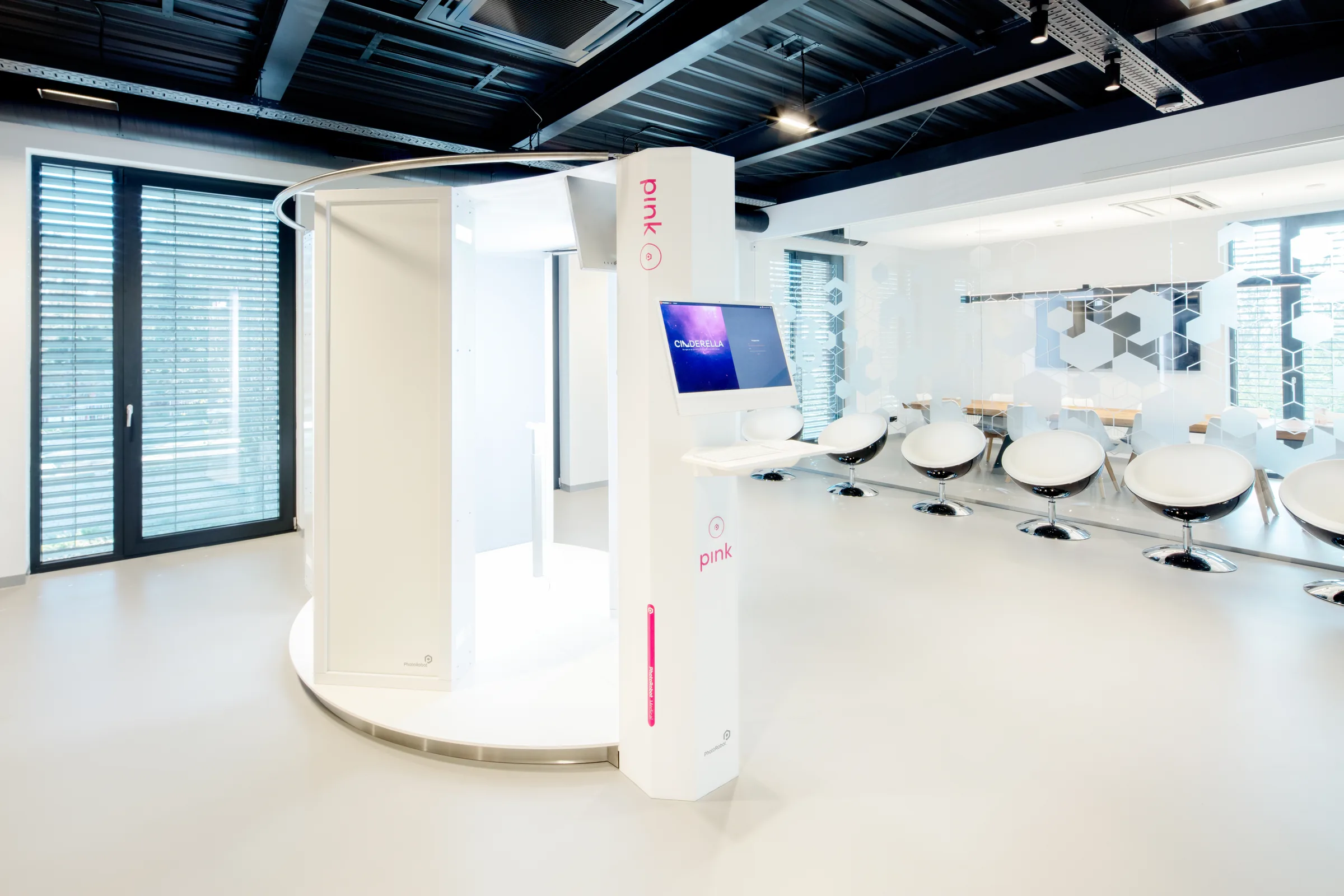
pink — the medical photographer robot, full showroom view
The machine itself

This is pink.

A purpose-built medical photographer robot — a curved studio cabin, calibrated lighting, and a fixed capture geometry, engineered and built in Prague and in clinical service today. It is the thing that makes the dataset, and every preview, possible at all.

Five years in serviceDeployed across multiple countries since 2022 — working every day, never stopped.
Apple-powered, one-touchNo photographic skill required of the clinician. Operator confirms ID, she steps in, capture runs.
Studio-grade lightingDiffuse, calibrated, identical every session — the consistency consumer cameras never reached.
Staff stay with the patientThe intuitive interface never pulls clinical attention from her. Anonymisation happens at source.
Built in Prague

Every pink is hand-built — and we know each one by name.

pink is not a product on a line. Each unit is built from steel and aluminium panels cut and folded on our TRUMPF cell, mechanical interfaces machined on our INTEGREX, optical-grade components 3D-printed on EOS and finished on DyeMansion, then handed across the floor for calibration and a soak-test before it ever leaves Prague. The image strip below shows six moments from a build that is happening right now.

That is the price of consistency. Every cabin, every camera tower, every kiosk arrives at a clinic having been measured against the same reference — which is why a session in Lisbon and a session in Gdansk produce images a trained model can compare without flinching.

Cinderella project

A project designed to improve patients' satisfaction and quality of life after breast cancer surgery and radiotherapy.

The Cinderella project — official tagline

Clinically proven across the consortium

Clinical sites across five countries. One identical dataset.

pink did not prove itself in a lab. It proved itself inside the EU-funded Cinderella clinical trial, coordinated by the Breast Unit of the Champalimaud Foundation in Lisbon, with identical machines deployed across Europe and Israel — every one capturing under identical conditions, which is the only way a dataset becomes trainable across sites.

€6.9M
EU Horizon Health grant
9
Consortium partners
5 yr
Project runtime · since 2022
2022
In clinical service since

Clinical sites where pink is deployed include the Champalimaud Foundation Breast Unit in Lisbon (project lead), San Raffaele in Milan, the Medical University of Gdansk, and the Sheba Medical Centre at Tel HaShomer — with further consortium partners contributing patient cohorts, the AI pipeline, data infrastructure and the clinical-evidence framework. EU Horizon Europe project 101057389, September 2022 – August 2027.

"The right to see yourself in the mirror — and like what you see."
The Cinderella project · Champalimaud Foundation, 2022
In motion

The Cinderella project, in a minute.

The scale of the need

This is not a niche. It is the most common cancer in the world.

Breast cancer is now the most commonly diagnosed cancer globally. Behind every figure below is a woman facing the same decisions — and, today, the same fear of the unknown that this technology is built to answer.

2.3M women diagnosed each year worldwide — the most common cancer in women in the majority of countries.
~1 in 12 lifetime risk globally; closer to 1 in 8 across high-income regions.
>90% 5-year survival in high-income settings when caught early — so quality of life after surgery matters enormously.
~2 in 3 are candidates for breast-conserving or reconstructive surgery — exactly the decisions pink informs.

Most survive — and then live for decades with the result of a decision made in fear. That is the addressable reality: not a rare condition, but a near-universal one where the aesthetic and emotional outcome has, until now, been left to the imagination.

Who is diagnosed, by age
Share of new breast-cancer cases by age band — illustrative, high-income pattern
Under 40~9%
40–49~19%
50–59~25%
60–69~26%
70+~21%

Diagnoses span every adult age, but cluster from the late 40s onward — and cases in younger women are rising. Figures drawn from public WHO / IARC data.

The opportunity — and the decision in front of a partner

Two ways to scale this. The technology serves both. The strategy is yours to set.

We have the proven machine and the unique dataset. What we are looking for now are partners to hyperscale it — and there are two honest directions that scaling can take. PhotoRobot is built to deliver in either, as the supplier that has already done the hard part.

Path A · proven today

The exclusive clinical instrument

For prestige clinics & solvent patients

Build on the clinically-validated PhotoRobot technology exactly as it stands — the uncompromising, defensible instrument that no one else has. A flagship offering for leading breast units and private clinics where outcome and experience justify the investment.

  • Highest margin, clearest differentiation
  • Leans on the existing clinical proof and dataset
  • The commercially proven starting point
Path B · the expansion question

A broader-access tier

Wider reach — smaller clinics, eventually beyond

Complement the flagship with a more accessible tier to reach further down the market. The researchers' instinct is democratisation; the honest caveat is that the cheap consumer route has already been shown not to work — so "accessible" still has to mean clinic-grade, just leaner.

  • Larger potential footprint and volume
  • Must preserve the consistency that is the whole moat
  • Most likely a clinic tier, not a home device
Our honest read: commerce will decide this, and commerce most likely lives in the clinic rather than the home — an exclusive tool for prestige institutions and solvent patients, with broader access following once the economics are proven. But that is a strategic call for the partner who scales this with us. Whichever way it goes, PhotoRobot profits as the proven supplier that can deliver in every segment.
Directions of development

What ships now, what ships next, and where the horizon goes.

pink today is one machine — clinically validated, in service, and the answer to the question "does this work at all". From here, three tiers describe how it grows. The instrument we ship now, the next wave of clinical sets a partner would help us deploy, and the horizon — where a software layer designed for high-throughput photography could, with adaptation, bring the same standard to clinical practice.

Today's robot

pink — the clinical instrument

A purpose-built medical photographer robot — curved cabin, calibrated lighting, fixed capture geometry, one-touch operator interface. Five years in service, deployed across the Cinderella consortium, the dataset already being created at every session.

In clinical service Champalimaud · San Raffaele · Gdansk · Sheba · …
Next clinical sets

Wave two — additional consortium-grade deployments

The same machine, the same calibration, additional clinical sites — each one extending the dataset and tightening the model. This is the immediate next thing a partner helps fund and accelerate; the engineering is unchanged, the work is reach.

Build queue ready Months from order to deployment
On the horizon

PhotoRobot TOUCH Software layer

A touchscreen photography app developed for high-throughput commercial studios — automated capture sequences, calibrated lighting recipes, hands-off operator flow. The clinical fit is plausible: a single touchpoint, predictable behaviour, anonymisation at source.

TOUCH is, today, designed primarily for mass production in commercial photography — adapting it to clinical practice would be part of the project. (And a standard professional camera with a large sensor, mechanical aperture and a large lens still delivers materially better optical quality with more repeatable control — TOUCH would complement that, not replace it.)

Adaptation track Partner-funded clinical scope
Honest framing: the work that has been done is the hard part — the machine, the calibration, the dataset that no one else has. The work ahead is reach, and reach is something a partner does well, not something we do alone. That is the shape of the conversation.
For brand & lifestyle partners

If your brand goes pink every October — here is how to make it mean something.

Every autumn, brands repaint their logo, sell a ribbon, and donate a dollar a basket. It is well-meant — and it is forgotten by November. Backing pink is the opposite: a tangible, working technology that changes how real women experience the worst year of their lives. It is a story with a beginning, a machine, and a happy end — not a sticker.

"But our customer is young — isn't breast cancer an older woman's issue?"

The most common objection from youth-focused brands — and the answer that widens the impact. Your young customer has a mother. A grandmother. An aunt who raised her. Buying from you helps save the women who raised them. That is a message a 22-year-old understands instantly — and it is a far deeper connection than a ribbon in a lapel.

The usual pink campaign
Pink awareness ribbon

Recolour the logo · sell a ribbon · $1 per purchase to a foundation · a lapel pin · done for another year.

Backing pink instead

Fund a working machine that reaches more women · tell a story with a real outcome · "your purchase helps the women who raised us" · a partnership, not a campaign.

What the customer remembers

A ribbon → nothing. A woman seeing her way through cancer because they bought a coat → everything.

Behind every pink

A proven supplier — not a one-off science project.

pink is built on the same modular engineering ecosystem that powers several thousand PhotoRobot units in service worldwide — luxury fashion fulfilment at industrial scale, aerospace and automotive documentation, FMCG packshot operations running daily across time zones. That is what made a multi-country medical deployment deliverable in months, and what makes pink a long-life medical device rather than a grant-funded prototype.

A partner is not betting on whether the thing can be built. It is built. The bet is on how far and how fast to take something that already works.

Six processes, one roof

The industrial spine that makes a hand-built medical machine repeatable.

Tour the build floor →
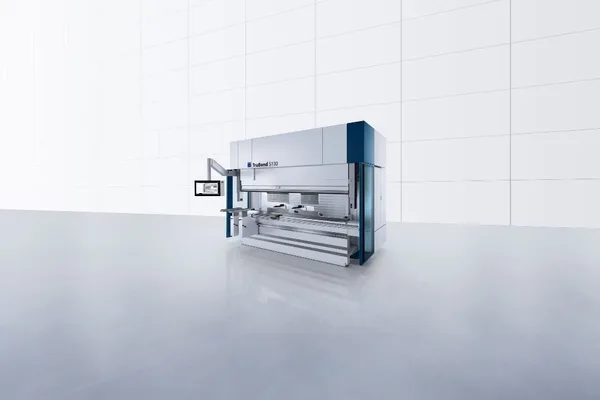
TRUMPF sheet-metal cell — laser cutting and bending
TRUMPFSheet-metal · panels, frame, housings
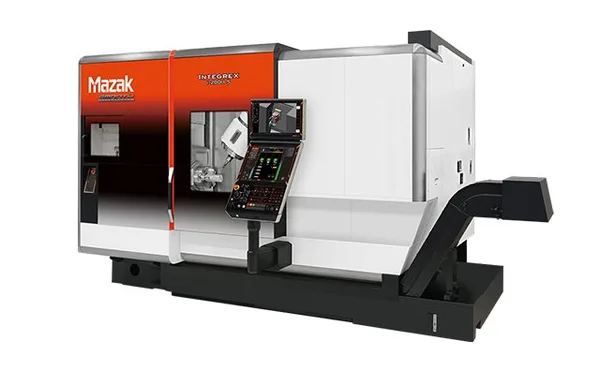
Mazak INTEGREX machining centre — turning and milling
Mazak INTEGREXMulti-tasking · precision mechanical parts
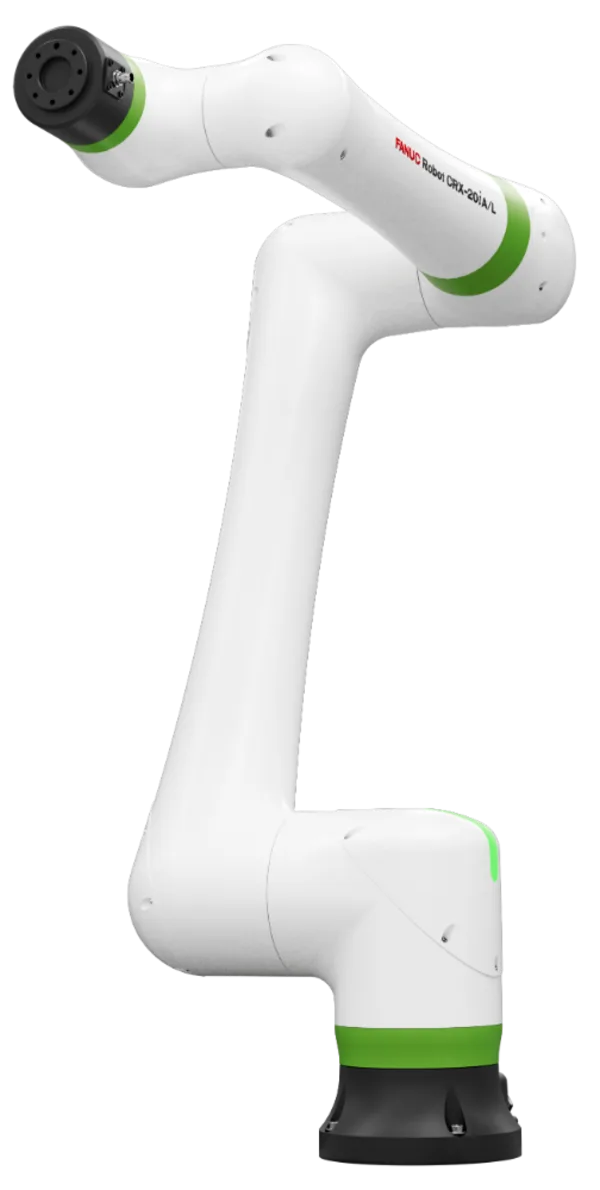
FANUC robotic cell on the production floor
FANUCRobotic cell · handling, automation
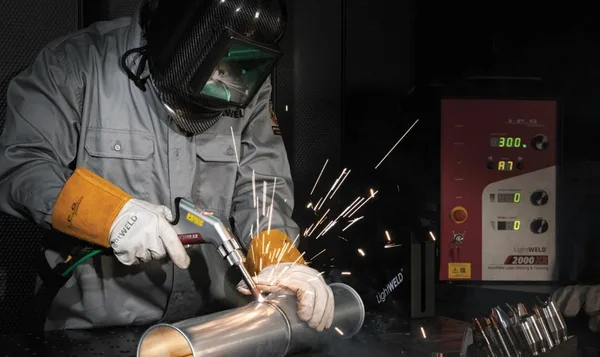
IPG fibre-laser welding system
IPGLaser welding · structural joins
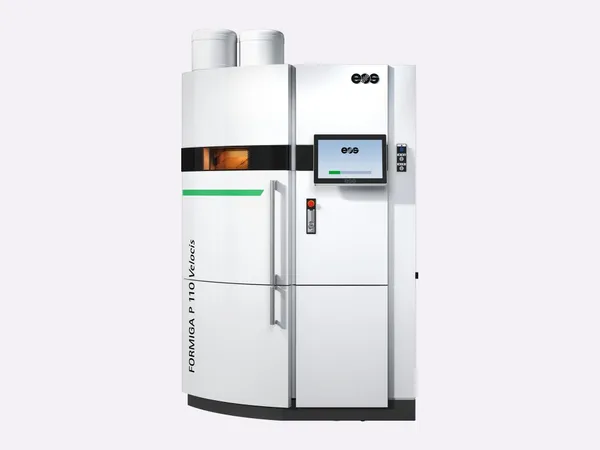
EOS additive-manufacturing platform
EOSAdditive · brackets, mounts, fixtures
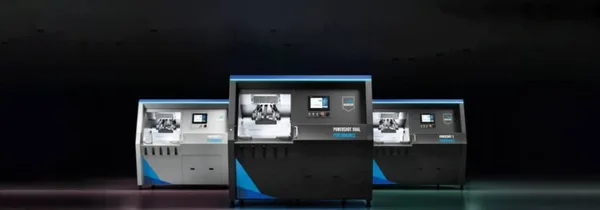
DyeMansion post-process finishing line
DyeMansionPost-process · surface, colour, optics

Industrial process imagery courtesy of TRUMPF GmbH, Yamazaki Mazak Corporation, FANUC, IPG Photonics, EOS GmbH and DyeMansion respectively — used here to credit the supplier ecosystem behind every PhotoRobot machine built in Prague. The engineering rationale for the lighting and capture geometry is covered in the photography engineering note →.

A family of four walking together at sunset — the years beyond
The next level

The fight against breast cancer just moved to a different level. The chance now is to bring that to every woman who needs it.

We have done the hard part — the machine works, the proof is in, the dataset is ours. What comes next is scale, and that is the part we want to build with the right partner.

The invitation

Three ways into this. Pick the one that fits you.

Whichever direction you come from, the conversation starts the same way: with a working machine, a proven dataset, and partners chosen with care.

For investors

The financial brief

A defensible dataset, a clinically validated hardware base, an addressable market with strong tailwinds, and a team that has shipped. You want to know what the next round funds, what the milestones are, and what the data-licensing strategy is.

Schedule a financial briefing
For clinical partners

The clinical-site brief

You operate a breast-cancer surgical programme. You want consistent imaging across years of follow-up, a record your patients can keep, and AI tooling that has been validated against multi-site data.

Request a clinical-site brief
For brand partners

The brand partnership

You are a brand whose customer base is touched by this disease — through mothers, sisters, aunts, grandmothers. You want to underwrite something deeper than a once-a-year pink-ribbon line, with a story year-round and real patients on the other side of it.

Talk to PhotoRobot Medical

Sources & further reading